 Promoting Outside the Box |
PROMOTING OUTSIDE THE BOX by JOAN HALL HOVEY
My best promotional efforts involve a combination of things. When my first book LISTEN TO THE SHADOWS was published, I didn't have a computer so my promotion was done outside the 'box' literally. Since I belong to writers organizations like Mystery Writers of America and Crime Writers of Canada and Writers Federation of New Brunswick, I made sure news of my book was included in their newsletter.
I did a mass mailing of flyers to bookstores in Canada and the U.S. I introduced myself at local bookstores and set up signings, and I did radio and TV interviews. (Some authors choose to send out postcards, but I like the substance of a flyer) If you are diligent, you will begin to create a bit of buzz that will gather momentum like the proverbial snowball rolling downhill. For example, the day after the TV interview was aired, the newspaper called for an interview. The story came out with the heading: A DREAM COME TRUE FOR LOCAL AUTHOR. Local woman lands New York publisher with first novel. I believe my own excitement and enthusiasm, not to mention hard work, had a lot to do with getting the exposure I wanted for my book.
You really do have to get out there and let people know about you and your book.
Finally, when the complimentary copies of my beautiful novel arrived, I had a poster of the cover blown up and pasted it around town - the library, university, etc. I've also done many interviews since, (like this one) written articles, all of which gets your name and the name of your books 'out there.' Share your experiences with other writers. I had an article coming out soon in THE WRITERS MAGAZINE titled 'My Journey to Publication.' I also had one in MYSTERY SCENE MAGAZINE. I was very excited to be included among the pages of these prestigious magazine, and moreso because they’re ones I've subscribed to for many years, and learned much from.
Since that first book, I’ve written The Abduction of Mary Rose, Night Corridor, Chill Waters, Nowhere To Hide and Defective, all available on amazon. It’s different now with the internet at your fingertips, literally. I’ll send out a press release and post on Facebook and Twitter and other social media. My wonderful publisher will run an on Kindle Daily Nation. I’ll do a virtual book tour. There are a number of book tour companies on the net. Google them. Compare prices and services. As I get older, travelling has little appeal for me, so this works great.
Remember: No one can sell your book like you can. It's your baby. Show it off. It goes without say that you should always present your best self, but I'll say it anyway: be warm, friendly, courteous always. Even when people ask you what you perceive to be dumb questions. Even if a bookstore owner declines to let you sign your books in her store. Be gracious, never be pushy or obnoxious. And remember to say thank you for any kindnesses or favors. A thank-you card to the story/library/coffee shop person is always appreciated.
Lastly, make sure everything you did for that first book is put into a file for future reference. You'll have accumulated names, addresses for your mailing list, and all sorts of helpful information that will save a lot of time and effort when you get ready to launch your publicity campaign for that second book. Good luck and happy writing!
Coming Soon! The Deepest Dark published by Books We Love
|
Monday, April 14, 2014
Promoting Outside the Box
I asked a group of authors about their experiences with promotion. Joan starts us off and I hope you guys will get involved in the conversation by responding in the comments section. for a chance to win a free book.


Monday, April 7, 2014
Let's Get Cozy! with Steve Shrott
I'm starting a new interview series with cozy writers. What, then is a cozy?
Cozy mysteries are considered “gentle” books… no graphic violence, no profanity, and no explicit sex. Most often, the crime takes place “off stage” and death is usually very quick. Prolonged torture is not a staple in cozy mysteries! The victim is usually a character who had terrible vices or who treated others very badly. And, there are usually connections between the victims (if indeed there are multiple victims… which usually, in a cozy mystery, there are!), even though the reader is not aware of the obvious connections until the amateur sleuth solves the crimes.
I'm NOT a cozy writer, as my Logan Hunter series smacks with violence and verges on horror at times. EGADS! I'd never planned it that way. Anyway, I read lots of cozies and have many friends and colleagues in the business who write them. Welcome to the first showcase:
Thanks, Susan.

 Thanks for the
interview, Susan!
Cozy mysteries are considered “gentle” books… no graphic violence, no profanity, and no explicit sex. Most often, the crime takes place “off stage” and death is usually very quick. Prolonged torture is not a staple in cozy mysteries! The victim is usually a character who had terrible vices or who treated others very badly. And, there are usually connections between the victims (if indeed there are multiple victims… which usually, in a cozy mystery, there are!), even though the reader is not aware of the obvious connections until the amateur sleuth solves the crimes.
I'm NOT a cozy writer, as my Logan Hunter series smacks with violence and verges on horror at times. EGADS! I'd never planned it that way. Anyway, I read lots of cozies and have many friends and colleagues in the business who write them. Welcome to the first showcase:
Steve
Shrott's short stories have been published in numerous print magazines and
e-zines. His work has appeared in ten anthologies––two from
Sisters-in-Crime (The Whole She-Bang, and Fishnets). Steve,
recently, had his humorous mystery, Audition For Death, published by Cozy Cat
Press. In his other life, he has written comedy material for well-known
performers of stage and screen. Some of his jokes are in The Smithsonian
Institute. His non-fiction book,
Steve Shrott’s Comedy Course, has been sold all over the world.
Welcome to the "Let's Get Cozy!" blog series, Steve.
How many mysteries have you written? Are they a series? If
so, does the series follow a certain theme (like knitting, painting, etc.) Why
did you choose that theme?
I’ve written two mysteries. Audition For Death is out now
and the other will be out later this year. They are the first books of
different series. The theme of, Audition For Death, is acting, and actors. I
chose that because I’ve acted and hung out with a lot of actors. A lot of them
are very interesting, sometimes, off-beat characters. I thought that would add
a lot of fun to a cozy mystery.
Wow! I can't imagine writing two different series at the same time.
Has your environment or background affected the genre you
write? How?
I have a background in humor, having written jokes for many performers,
as well as comedy screenplays, funny articles and humorous short stories. So
when it came to writing a mystery, I thought my forte would be in doing
something that had humor.
Give a short synopsis of Audition For Death.
It’s a fun mystery about struggling actor, Joshua Mclintock. Although,
he’s appeared in numerous films and stage productions, most of his roles have
been as dead bodies. When he’s about to be arrested for a crime he didn’t
commit, he makes a run for it. (Mostly, because he has an audition for Hamlet.)
He soon discovers sinister forces threatening to destroy Hollywood, and he must
try to save it, and himself, before it’s too late.
What do you think is the greatest lesson you’ve learned
about writing so far? What advice can you give new writers?
One of the key things I’ve learned is that no matter how
tough things seem at the time, you have to keep going. Even, though I may not like
what I’m writing, I know that, eventually, I’ll find a way to make it better.
We all know how important promoting our work has become. How
do you get the word out to cozy readers
both off and online?
I have a website, blog and Facebook. I’m just in the learning
process about twitter now. My key thing about promotion is that I want people
to know about my book, but I don’t want to become that guy who hijacks every
conversation or email to talk about it. My actual preference is to sell books
at live events—signings, readings and talks. Even before my recently published
novel, I was doing talks on various subjects, so I’m very comfortable doing
that.
Can you tell us your future writing goals/projects?
I’m hoping to write some more cozy novels, some in the two
series I’ve started. I really like to create unique characters so I’m sure I’ll
be writing some new mysteries as well. I also enjoy writing short stories, having
published forty so far. So I will keep writing those. At some point, I would like
to attempt something more serious, perhaps a thriller.
Where can folks learn more about your books and events?
My website is steveshrottwriter.weebly.com
My facebook page is facebook.com/steve.shrott.9
My book, Audition For Death, is available in print and ebook
format at Amazon and other online sources. You can get it at http://amzn.to/1b4LJVX
Thanks for the
interview, Susan!
My pleasure, Steve. Happy sales!
Monday, March 24, 2014
J.D. Holiday: Children's Picture Books

J.D. Holiday is the author and illustrator of the children's picture
books- JANOOSE THE GOOSE and THE SPY GAME, and the chapter book for 6 to 8 year
olds, THE GREAT SNOWBALL ESCAPADE. She is the host on "It's Story Time" & "Halo Kids Tales", children's reading radio shows, and "The Authors' Words" on the
Book Garden Radio on Red River Radio at Blog Talk Radio. She is a member of The Society of Children's
Book Writers and Illustrators.
Her sites: http://bookgardennook.blogspot.com/
Blog Talk Radio: http://www.blogtalkradio.com/rrradio
Wow! You're a busy lady, J.D. Thanks for taking the time to answer a few questions.
My pleasure, Susan.
How has your environment affected your writing?
If you mean by environment, my life experiences, then I would say in
every way. I can't write without finding a place I've been or a feel I've had
that my characters will escape feeling or walking those streets. For me writing
is very personal.
How many books have you written?
I have three children's books in
print and e-book form. Janoose The Goose, my first book, which is a picture
book, The Great Snowball Escapade, a chapter book for 6 to 9 year olds and my
latest book is The Spy Game, a picture book as well.
Give a short synop of your most recently published book.
In The Spy Game, the young boy, Eddie would love to have a puppy to play
with. But his Uncle Reese brings Eddie an older dog named about a famous spy.
What can you do with an old dog? It probably couldn't learn new tricks, and the
only thing this dog did was stare. It's what they find to do together that
makes them the best of friends!
How much of yourself is hidden in the characters in the book?
As you can see by my answer to question one, quite a bit. For
instead, my brother, Ike's dog Sheeba had puppies. He ask me to take this one
puppy he named, Sidney Reilly after a spy series he and I watched
together. At the time I had a dog and
didn't think my older dog would be happy
with a new addition.
My brother felt sure this dog was for me and he kept it with that in
mind. When the puppy was 11 months old, my brother died of a heart attack. AND
Sidney came to me. I was wrong to think that my dog, Snoopy and Sidney would
not get along. They did, in their own way. In The Spy Game Eddie's Uncle Reese
who is modeled about my brother brings Sidney to Eddie's house to live.
Where do you store ideas for later use: in your head, in a notebook, or
on a spreadsheet?
For most of my stories, when I come up with one, I write an outline for
it to get it started. Then I place it in a notebook or binder. From there on, I
will jot down notes on bits of paper and shove them in between the pages of the
notebook or binder that's dedicated for that particular story.
Can you tell us your future writing goals/projects?
I have many stories written or started that need to be done. Right now I
am working on a collection of short stories I have written for adults that will
be in a bookcalled Short Stories and Other Imaginings For The Reading Spot. And
I'm doing pictures to a sequel to my first children picture book, Janoose The
Goose called The Fall Feather Fair co-written with my grandson when he was 6
years old. Luke is now 8. I am also
working on a collection of short stories I have written, for adults called
Short Stories and Other Imaginings For The Reading Spot.
Where can folks learn more about your books and events?
People can find out more aabout me, my books and my radio shows on my
site:
http://bookgardennook.blogspot.com/
If they want to follow me they can find out where I am there as well.
Are your books available in print and ebook formats?
My books can be bought on Amazon and Barnes & Noble on line and
ordered in bookstores.
The Spy Game book:
AMAZON:
http://www.amazon.com/The-Spy-Game-JD-Holiday/dp/0981861449
B&N:
http://www.barnesandnoble.com/w/the-spy-game-j-d-holiday/1112796163?ean=9780981861449
E-book:
AMAZON: http://www.amazon.com/Spy-Game-J-D-Holiday-ebook/dp/B009EGBY1K
B&N:
http://www.barnesandnoble.com/w/the-spy-game-j-d-holiday/1112796163?ean=2940045442527
The Great Snowball Escapade book:
AMAZON:
http://www.amazon.com/Great-Snowball-Escapade-J-Holiday/dp/0981861423
B&N:
http://www.barnesandnoble.com/w/the-great-snowball-escapade-jd-holiday/1026666723?ean=9780981861425
E-book:
AMAZON:
http://www.amazon.com/Great-Snowball-Escapade-JD-Holiday-ebook/dp/B003ODIV4C/
B&N: http://www.barnesandnoble.com/w/the-great-snowball-escapade-jd-holiday/1026666723?ean=9780981861432
Janoose The Goose book:
AMAZON:
http://www.amazon.com/Janoose-Goose-J-D-Holiday/dp/0981861407/
B&N: http://www.barnesandnoble.com/w/janoose-the-goose-jd-holiday/1102513406?ean=9780981861401
E-book:
AMAZON: http://www.amazon.com/Janoose-Goose-J-D-Holiday-ebook/dp/B001F0R5HU
B&N:
http://www.barnesandnoble.com/w/janoose-the-goose-jd-holiday/1102513406?ean=9780981861418

I wish you the best of sales and artistry, J.D.
Thank you, Susan, for
having here!
Saturday, March 15, 2014
Conda Douglas

She's traveled the world from Singapore to Russia (in winter!) and her own tiny office, writing all the while. She delights in writing her cozy Starke Dead creative woman mystery series with amateur detective jeweler Dora Starke. The more Dora discovers cursed jewelry, her aunt digging graves, and a rampant poisoner, the more fun Conda has--although sometimes Dora complains about her plight! Next up, Starke Raving Dead, in which Dora's mad Aunt Maddie proves the aptness of her name.
Welcome to the blog, Conda.
Thank you , Susan. It's nice to be here.
How has your
environment affected your writing?
Without having grown up in Sun Valley, Idaho, I would have
nothing to write about! Okay, partly kidding. But the huge majority of my
writing takes place in a version of a small town in the mountains of Idaho. My
mystery series is placed in the Sun Valley I knew growing up, which I renamed
Starke so I could move the mountains to my own choosing.
 How much of yourself
is hidden in the characters in your books?
With any luck, I've managed to squeeze all of me into my
main character, Dora Starke, of my Starke
Dead series. Since she's younger and thinner, sometimes it's a tight
squeeze.
My main character, Swoop, in my Mall Fairies series, possesses plenty of flaws, but also strengths
which, in another life, I would hope I possess—and sometimes hope I perhaps do
in this life.
What challenges did
you face while writing your series?
The main challenge in Starke
Dead series is how much of a world I know intimately and perhaps too well
should I include? How much to leave out? After consulting my beta readers, I
concluded that I needed to do what worked for me as one reader would say
"too much" and the next would say "too little"!
In my Mall Fairies
series the huge challenge is not in creating the fantasy world, but in
remembering it for each separate book! And yes, everyone says to keep a
"bible" but I'd much rather be writing the novel.
What do you think is
the greatest lesson you’ve learned about writing so far? What advice can you
give new writers?
What I've learned over and over in the course of my writing
career is one simple caveat: It's the writing, stupid. What other people are
writing, what's the newest best seller, who is doing what to sell and when,
none of that matters a whit. It's only the writing that matters. Because, at end of day, if I can tell myself I
worked hard on my greatest passion, writing, and did the best I could to write
the best I could, it's a good day.
Can you tell us your future
writing goals/projects?
Next up is the second novel in my Starke Dead series: Starke
Raving Dead, in which Aunt Maddie goes mad as she always does, but has she
gone insane? Perhaps, her niece Dora
thinks, when Dora discovers Aunt Maddie digging a grave in the back yard!
Then it's on to the last of the Mall Fairies trilogy, The Mall Fairies: Destiny. The fairies,
pixies and human Grace believe there problems are over—until the arrival of
their old nemesis, Aunt Diane. That's just the beginning of their
troubles—trolls anyone?
Where can folks learn
more about your books and events?
My Amazon page: https://www.amazon.com/author/condadouglas
Are your books
available in print and ebook formats?
The best place to find the majority of my published works,
whether in ebook, print or audio is on my Amazon page: https://www.amazon.com/author/condadouglas
Sunday, January 19, 2014
Coryell's Red, Red Rose
 A RED, RED ROSE by Susan Coryell – The Wild Rose Press
Sometimes even the most fiercely guarded secrets are destined to be revealed.
A native Virginian, Susan Coryell is a career educator and a lifelong writer. She has taught students from 7th grade through college-level and is listed in several volumes of Who’s Who in Education and Who’s Who in Teaching. A favorite activity is to talk with budding writers at schools, writers’ conferences, and workshops.
Susan has always been interested in Southern culture and society, as hard-felt, long-held feelings battle with modern ideas. She was able to explore these concepts in her cozy mystery/Southern gothic A Red, Red Rose, whose fictional setting is based on Smith Mountain Lake, Virginia. The ghosts slipped in, to her surprise.
When not writing, Susan enjoys boating, kayaking, golf and yoga. She and her husband love to travel, especially when grandchildren are involved.
Welcome to the blog, Susan. How many books have you written?
My first published novel, Eaglebait, a young adult work involving school bullies was published over twenty years ago. It won The International Reading Association’s “Young Adult Choice,” and the NY Public Library’s “Books for the Teen Age” awards. I have recently updated Eaglebait to include cyber-bullying and it is available in print and e-book via Amazon and Barnes and Noble. A Red, Red Rose is my second published book.
Give a short synopsis of your most recent book.
When twenty-year old Ashby Overton travels to Overhome Estate for a summer in Virginia, she hopes to unearth her ancestral roots and the cause of a mysterious family rift surrounding the death of her Grandmother Lenore years ago. From the moment she enters her room in the oldest wing, Ashby feels an invisible enfolding presence. She learns the room once belonged to a woman named Rosabelle, but no one is willing to talk about Rosabele—no one except Luke, the stable boy who captures Ashby’s heart. As Ashby and Luke become closer, she realizes he can be the confidant she needs to share the terrifying secrets unfolding. Ever present is a force Ashby never sees, only feels. Candles light themselves, notes from an old lullaby fall from the ceiling, the radio tunes itself each day. And roses appear in the unlikeliest places. Are the roses a symbol of love, or do they represent something dark, something deeply evil?
Q: What challenges did you face while writing this book?
I started writing A Red, Red Rose while living in Northern Virginia, the scene of an actual ancestral home reputed to be haunted. After retiring to Southern Virginia, I decided to switch the setting there. The problem was I had not lived there long enough to fully understand the cultural nuances. So, I fictionalized the setting as Moore Mountain Lake and made up whatever details I wanted. That’s the great thing about writing fiction!
Q: Do you travel to do research or for inspiration. Share some special places.
Research was key for the history background of A Red, Red Rose. Fortunately, Virginia is very big on history. I believe seven US presidents were born in the state and George Washington and Thomas Jefferson are sacred! I spent hours in the Bedford Museum, which specializes in local history. There I found my prototype for Overhome Estate, as well as information on the formation of Smith Mountain Lake. I talked to the historians at Booker T. Washington’s birthplace in regard to slave cemeteries and consulted professors about Civil War activity in Southern Virginia. Lots of work, but lots of fun and I met some fascinating folks.
Q: What is your greatest lesson learned about writing so far. What advice do you have for new writers.
Like most writers, I have to edit, edit, edit. I find putting my work aside for a day or so and re-reading it from a fresh point of view helpful. For new writers, I suggest joining a critique group. For writers of all ages, I say read constantly.
Q: Promotion—how do you get the word out both off and online?
Ah, promotion—my most dreaded aspect of being a published author. I work hard at what I call hands-on promotion. I’m good at holding signings, workshops, author talks and panel discussions. I enjoy speaking to any group who invites me—be it schools, book clubs, community organizations or church. It’s the online promotion I find most challenging. I have a good website, a pretty decent blog (which I need to write on more frequently), and I belong to Face Book, Linked In, She Writes, Goodreads, and my Authors Helping Authors publisher’s group. An English major through and through, I find technology baffling and frustrating, but I battle on. Just opened a Twitter account—so we’ll see how that works.
Q: What are your future writing goals/projects??
I am so glad you asked! I have just finished the sequel to A Red, Red Rose and am editing, editing, editing until I muster the nerve to submit it to my publisher. Called Beneath the Stones, the cozy mystery/Southern gothic finds Ashby Overton five years later, mistress of the manor and planning her wedding when a big problem emerges. Of course, there are spirits involved and these ghosts originated during the Civil War. Talk about research! I have become quite the expert on Confederate history—visiting battlefields, museums and ancient houses—attending lectures, perusing books and scouring the Internet. It was a learning experience, for sure.
Where can folks learn more about your books and events?
My website: http://www.susancoryellauthor.
Eaglebait is available at Amazon in print and as e-book for Kindle. It is also available for Nook.
A Red, Red Rose is available on Kindle:
It will be offered FREE from Jan 21 – Jan 21 – Jan 25.
A Red,Red Rose is available in print from Amazon or The Wildrose Press.http://www.wildrosepublishing.
Thanks for the opportunity to blog on this awesome blogspot and I hope to hear from lots of readers!


Monday, January 13, 2014
Suicide Kings

Christopher J. Ferguson is an associate professor of
psychology at Stetson University where he studies violent behavior and the
effects of media violence. His research
has generally questioned whether media such as video game violence contributes
meaningfully to societal violence and his work has been cited by the US Supreme
Court. He lives in Winter Springs,
Florida with his wife and son.
Do you travel to do
research or for inspiration? Can you share some special places with us?
I love to travel and have often been inspired by places I’ve
been. Suicide Kings came about due to a trip to Florence. I had gone there for an academic conference
and went myself for that trip without my wife and son. Homesickness set in pretty quick and I found
myself unusually despondent despite basically being on vacation. Florence as a city is both very beautiful and
very imposing, still having many tall Renaissance buildings that loom over you
and cut out a view of the horizon. I
remember thinking to myself, “This would be an excellent city to die in.” And
thus was Suicide Kings born. I wrote what would become chapters 2 and 3
there in Florence or in the airports on the way home.
Give a short synop of
your most recently published book.
As a young woman in Florence, Diana Savrano’s life is a
privileged one of elegant balls, handsome suitors and frivolity. But the sudden death of her mother leaves her
adrift and abandoned. As she sobs over
her mother's casket, another member of the procession reveals the awful truth:
that before her last days, Diana's mother had joined a Luciferian cult. Despite knowing little beyond her pampered
world, Diana determines to unmask those responsible for her mother’s
death. But someone does not want such
secrets revealed, and they are willing to send assassins to keep her
silent. Paranoia and loneliness set in as even her closest friends reveal
hidden agendas. Worst of all, the
further she follows the intertwined threads, the closer they appear to lead to
her own father.
How much of yourself
is hidden in the characters in the book?
That’s a particularly interesting question since the lead
characters are mainly female! I’ll let
readers psychoanalyze me if they wish!
But I think, of course, as writers, some of ourselves ends up in
characters, particularly characters we identify with. And for a character like Diana Savrano, I
drew as well from the strong women in my life, particularly my wife and my
mother. That’s one element of myself as
well that was crucial to this book, and a lot of my writing really: I am most
interested in strong women characters.
I’ve written some stories with male leads but, overall, don’t find them
to be quite as interesting. And I think
there is a need for more books (and movies and television shows) with strong
women (and girl) characters.
What challenges did
you face while writing this book?
The biggest challenges for me are time and energy. I have a full-time “day job” and a family
that likes attention, so with that, finding a few hours here or there to write
can be tricky. And I’ll be honest, that
time also competes with things like compelling television! Given the enormous amount of hours that go
into writing a book, maintaining some degree of diligence to get it done is
always the tricky part. It’s easy to
come up with a great idea, harder to write it down!
What do you think is
the greatest lesson you’ve learned about writing so far? What advice can you
give new writers?
Persistence, I’d say, is the greatest virtue of the writers,
whether writing fiction, non-fiction or academic publishing, it’s all the
same. Rejection is our lot in life, and
being able to persist and believe in what we’re doing in the face of that rejection. That may sound bleak, but it’s the way of
things. People who are able to
persevere, to improve their craft, to remain sure of what they’re doing in the
face of early rejection will be the ones to ultimately succeed. If you let fear of rejection stop you, it
will be impossible to advance in any kind of career in writing.
Where do you store
ideas for later use: in your head, in a notebook, or on a spreadsheet?
It’s all in my head!
I’ve tried other approaches before, particularly notes and outlines, but
ultimately I prefer to let things be a bit more free-form. I think that helps stories to develop a bit
more organically. Very often the way a
story comes out is quite different from what I’d originally envisioned.
Where can folks learn more about your books and events?
My web-page is www.Christopherjferguson.com. Suicide Kings can be found on Amazon at: http://www.amazon.com/Suicide-Kings-Christopher-J-Ferguson/dp/1628300701/ref=sr_1_1_bnp_1_pap?s=books&ie=UTF8&qid=1388069487

Monday, January 6, 2014
Tears of Isis
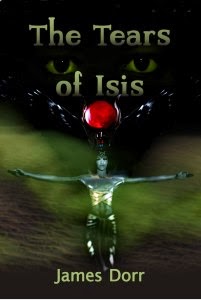
James Dorr
combines the charm of a gentleman born in the US South with the wiles of a
near-New York City upbringing, the canniness of a one-time New England
resident, and the guile of an outwardly stolid Midwesterner. Or so he says. It is known that he was born in Florida, grew
up in New Jersey, went to college in Massachusetts, and currently lives in
Indiana. He is a short story writer and
poet working mainly in dark fantasy and horror with forays into science fiction
and mystery, and has previously worked as a technical writer for an academic
computing center, associate editor on a city magazine, a nonfiction freelance
writer, and a semi-professional Renaissance musician. In addition to three prose collections and
one of poetry, Dorr has had nearly 400 appearances in publications ranging from
Alfred Hitchcock’s Mystery Magazine to Yellow Bat Review.
He also has a
cat named Wednesday, for Wednesday Addams in the original 1960s TV show The
Addams Family.
Wecome to the blog, James.
How has your
environment affected your writing?
How has it
not? But environment is more than just
the things around one, it’s the noticing of these things -- the close
attention. Travel can be a part of it,
but there’s also research, and the leisure to visit the library. For instance, in the title story of my latest
book, the action at the end takes place in the Boston, Massachusetts area where
I lived for about five years. But the
story starts in San Francisco, where I’ve never been, yet through research --
even if it may have ended up being condensed into just a few sentences -- I
hope I’ve made it seem as alive as the locations later on. But then there’s also the environment of the
mind, the completely made up, influenced in part by the things one has
read. In my own case I’ll cite The
Complete Greek Tragedies of Aeschylus, Sophocles, and Euripides (say
what? For an explanation -- and why you
might read these too, if you haven’t -- see my introduction to Telling Tales
of Terror: Essays on Writing Horror
& Dark Fiction, Kim Richards, ed., Damnation Books, 2012); The
Complete Tales and Poems of Edgar Allan Poe; Ray Bradbury’s The October Country and
The Martian Chronicles, et al.; I Am Legend by Richard Matheson.
. . . The list goes on.
Give a short
synop of your most recently published book.
Art and
creation, Medusa and creatures of the sea, blood-drinking with or without
foreign entanglement, musical instruments fashioned from bone, Cinderella and
sleeping beauties, women who keep pets, insects and UFOs, ghouls as servants
and restless undead. And Isis herself as
both weeping mother and vulture-winged icon of death and destruction. These are among the subjects that inspire the
seventeen stories (plus opening poem) in The Tears of Isis, my latest
collection published last May (2013) by Perpetual Motion Machine Publishing ( http://perpetualpublishing.com/the-tears-of-isis/. Citing the book’s blurb, “the Elizabethan
poet Sir Philip Sidney spoke of art as ‘making things either better than nature
bringeth forth, or, quite anew, forms such as never were in nature,’” and so in
The Tears of Isis I hope will be found both the beauty that Sidney and
others admired, and also the grotesque, the strange and bizarre.
How much of
yourself is hidden in the characters in the book?
The Tears of
Isis
has an overall theme on the link between beauty and destruction, of art and
death, even beginning with a poem and ending with a story that are both about
sculptors. I don’t sculpt myself, but I
used to do some illustrating and I still cartoon a little. I also play music. I write poems. I like to perform at readings. In short, I relate to the artistic side of a
number of the stories’ characters, whether directly or indirectly -- as well as
the problem solving side, because that’s a part of the creative process
too. But at the same time, I also face
the destructive (including self-destructive) side of creation, for example the
isolation it forces when one must concentrate on a work in progress.
What challenges
did you face while writing this book?
For The Tears
of Isis, part of the attraction was that I’d have a free hand from start to
finish, the only “restriction” being that it had to total at least 60,000
words, in contrast to previous fiction collections for which I simply supplied
a number of stories for the publisher to choose from and, from them, construct
the actual book. So I had to learn to be
an editor: to look at a large number of
stories and narrow them down to a manageable few, and then to look at these as
groupings from which I could choose what I thought might be an appropriate
theme, in this case the idea of art and beauty as holding within themselves a
destructive aspect (and thus beginning with a poem of Medusa as sculptress, at
least symbolically turning her models into stone, while the closing title story
comes back to another sculptress who leaves her own trail of victims behind
her). From there the challenge was to
select individual stories that I could order in such a way that each might seem
to flow into the next in at least some aspect -- even if completely different
in other ways -- offering readers a wide variety in themselves, yet adding up
to a greater unity when the book is taken as a whole. That is, hopefully, leaving readers with a
feeling that what they’ve just read amounts, in some way, to more than just a
few evenings’ entertainment.
What do you
think is the greatest lesson you’ve learned about writing so far? What advice
can you give new writers?
The first thing
is character, even if sometimes it may not seem apparent. A. J. Budrys defined the first three elements
of a story as a Being (character) in a Situation (environment)
with a Problem (motivation). It’s
the solving of the problem (or failure to solve) that becomes the story. But what makes a character is the author’s
getting into his or her (or its, especially if it’s a villain -- it could be an
alien or a sentient monster) head. To become
that being, see through its eyes, hear through its ears, smell through its
nose, feel with its feelings -- themselves influenced by the being’s
environment too -- and convey those feelings to us as if you were yourself the
character. This is the meaning of “show,
don’t tell”: Telling is an author’s
description of a character; showing is the author’s conveying an understanding
of what that character feels and does and why.
And one more
lesson is persistence. Victory comes not
only to the bold, but to those who keep at it, the same as a character in a
story, suffering defeats (rejections) and disappointments but still striving
forward until a goal has been reached.
And then realizing that that’s just the first goal.
Can you tell us
your future writing goals/projects?
Last month, as I
write this, I sold a story called “Casket Girls” to the electronic magazine Daily
Science Fiction, a vampire tale relating a legend of New Orleans, which was
the location of 2013’s World Horror
Convention. So in a sense, that was my
“What did you do on summer vacation?” story.
In a larger sense, though, I’ve been working on a series of stories
that, somewhat like the late Ray Bradbury’s The Martian Chronlcles, add
up to a sort of quasi-novel. Set in the
“Tombs,” a huge necropolis and its environs on a far-future, dying Earth,
sixteen of these have been published already in various places, including three
(two reprints, “Mara’s Room” and “River Red,” and one, “The Ice Maiden,” for
the first time) in The Tears of Isis, and another, “Raising the Dead,”
is scheduled to be out in White Cat Publications’s steampunk anthology Airships & Automatons. While I’m currently continuing to treat these
as separate items, writing and marketing them as stand-alone stories, I may eventually
start to look into a book publication for these as well, possibly with a larger
publisher.
Then another
project of sorts, of which The Tears of Isis is itself a part, is to
start getting some of my older stories back into print, often in anthologies
that sound intriguing in themselves, but are unlikely to pay as much as might
be appropriate for an original story.
This, of course, has something to do with the economy too, but I’ve been
writing long enough that I don’t want some of my earliest professional work to
be forgotten.
And then, of
course, I’m writing new stories -- and lots of poetry -- often these days
fairly short and tailored to the internet market, of which “Casket Girls” is a
recent example.
Where can folks
learn more about your books and events, and are your books available in print
and ebook formats? (please provide the buy link for easy reader accessibility)
I have four
full-size collections, more information on all of which can be found by
clicking their pictures in the center column of my blog, along with several
single-story electronic chapbooks and a slew of individual fiction and poetry
appearances, some of which can be found on my Amazon author Page, http://www.amazon.com/James%20Dorr/e/B004XWCVUS/ref=la_B004XWCVUS_pg_1?rh=n%3A283155%2Cp_82%3AB004XWCVUS&ie=UTF8&qid=1382916681
My first two
(mostly) fiction collections are Strange Mistresses: Tales of Wonder and Romance and Darker
Loves: Tales of Mystery and Regret
from Dark Regions Press, which are available in print via Amazon, et al., as
well as directly from the publisher by clicking
http://www.darkregions.com/james-dorr/
My third,
all-poetry collection is Vamps: A
Retrospective, from Sam’s Dot Publishing/White Cat Publications, and can be
found in both print and ebook editions at http://www.whitecatpublications.com/products-page/poetry/vamps-2/
My newest
collection is The Tears of Isis which is available in print and
electronic forms from Perpetual Motion Machine Publishing, as noted above, as
well as on Amazon, Barnes & Noble, and Amazon UK. The local (American) Amazon site is located
at http://www.amazon.com/The-Tears-Isis-James-Dorr/dp/0988748843
Then finally
there’s my blog itself for up-to-date information on sales, books, etc., as
well as an occasional sample poem or story at http://jamesdorrwriter.wordpress.com
Wishing you the best of sales in the new year, James!

Subscribe to:
Posts (Atom)